Hiko Electrical – Solar Installations in Papamoa & the Bay of Plenty
Executive Summary: Hiko Electrical (Papamoa, Tauranga) is a leading local solar panel installer and electrical services company. Founded in 2017, the company is a Master Electricians-accredited team delivering residential and commercial solar PV systems, battery storage, EV chargers, heat pumps, and general electrical work in the Bay of Plenty. Backed by the wider HIKO Group (which includes HIKO Solar and EcoAir Heat Pumps), Hiko leverages deep electrical expertise to design safe, high-quality solar installations tailored to local conditions. With over 240 five-star Google reviews and membership in the BizWin Bay of Plenty directory, Hiko is known for reliable service, honest pricing, and clean workmanship.
Company Overview
Hiko Electrical is a Tauranga-based electrical contractor founded in 2017, operating across Tauranga, Papamoa, Mount Maunganui and the wider Bay of Plenty. The close-knit, local team holds Master Electrician accreditation and has grown rapidly by word-of-mouth, now boasting 240+ five-star reviews. As a member of the HIKO Group, Hiko Electrical works alongside HIKO Solar and EcoAir Heat Pumps under one brand, providing integrated, energy-efficient solutions. In practice, this means clients can get a solar power system from design to installation through the same team that handles their house wiring and heat pump service. Hiko’s values emphasize quality, communication and respect – “doing the job properly, communicating clearly, and treating every client with respect”. The company’s portfolio covers all scales of work: from simple residential call-outs to large commercial fitouts.
According to local directories, Hiko Electrical “stands out in Papamoa, Tauranga” for professional solar and electrical work. Customers frequently praise Hiko’s quick responses, competitive pricing, tidy workmanship, and helpful communication. Over time, Hiko has expanded its team to maintain fast service and cover growing demand: its current capabilities include residential and commercial wiring, renovations, heat pump installation, and end-to-end solar PV installs. The company prides itself on trust – no hidden costs and transparent quotes – and backs every job with full insurance and master electrician expertise.
Services Offered
Hiko Electrical offers a full suite of solar and electrical services tailored to home and business customers in the Bay of Plenty:
- Residential Solar Installations: Custom rooftop PV systems for homes, including grid-tied, hybrid or off-grid designs.
- Commercial Solar Installations: Larger solar arrays for businesses, farms, schools and community buildings.
- Battery Storage: Integration of home battery systems (e.g. lithium-ion batteries like Tesla Powerwall, LG Chem, etc.) for time-shifting and backup.
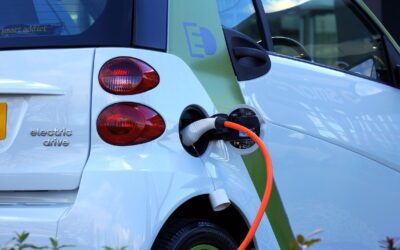
- EV Charger Installation: Electric vehicle (EV) charger setup (e.g. Tesla Wall Connector, or universal EV chargers) to take advantage of daytime solar production.
- Electrical Maintenance & Repairs: Ongoing servicing of PV and battery systems, as well as general electrician services (switchboard upgrades, lighting, appliances, etc.).
- Monitoring & Support: System monitoring solutions and post-install support.
By virtue of being Master Electricians, Hiko’s team handles all necessary compliance (Certificates of Compliance, signoffs, etc.). They can also liaise with power companies for any required approvals or meter changes. In short, Hiko provides a one-stop solar solution: initial advice and design, quality equipment supply, professional installation, local council and lines-company permitting, and ongoing service.
Typical System Sizes & Pricing
When planning a solar PV system, capacity (in kW) and cost will vary by household or business needs. Below is a comparison table of typical system sizes, components, and price ranges (NZD) in today’s Bay of Plenty market. Prices are approximate; actual quotes depend on panel brand, inverter, roof complexity, and other factors.

- Panels: Quality crystalline modules (monocrystalline/PERC) are standard, with 25-year performance warranties. For example, Fronius uses 8 panels + 3kW inverter for their 3kW package. Hiko typically sources Tier-1 brands (e.g. Jinko, JA Solar, DAS, Tesla Solar) proven in NZ conditions.
- Inverters: String inverters (Fronius, GoodWe, Huawei etc.) from 3–20+ kW are common. Many manufacturers guarantee 10 years (e.g. Fronius 10-year warranty), often extendable to 15.
- Batteries: A popular choice is the Tesla Powerwall 3 (~13.5 kWh) or equivalent. (For reference, Tesla lists a dual-Powerwall system at NZ$24,600 (incl. GST).) Other battery brands (LG, Sungrow, etc.) also range in price.
Because solar installations costs (roof access, wiring run, consents) can vary, Hiko provides fixed quotes after site assessment. In general, NZ solar system prices are around NZ$3,000–$4,500 per kW installed. For example, a standard 6.6 kW residential system in Tauranga runs roughly $12,000–$15,000. A 3 kW system (small home) can start around $9,000. Commercial systems (>10 kW) benefit from economies of scale but still cost tens of thousands of dollars. Hiko can install EV chargers as part of the project – typically adding ~$2,000–$3,500 each for hardware and install.
Local Context: Climate & Usage
Tauranga and Papamoa are exceptionally sunny: about 2,350+ sunshine hours per year. This is one of the highest in NZ, making solar especially productive here. Most homeowners use on the order of 7,000–9,000 kWh/year, so a 6–8 kW system often meets much of a family’s needs. According to EECA, a 5 kW system in the Bay of Plenty can save roughly $1,368 per year on power bills. With current retail rates (~39c/kWh, or ~$0.39/kWh on average in NZ), that equates to fast payback.
Indeed, both industry data and EECA note that solar paybacks are typically 7–9 years under current prices. Rising electricity costs (the North Island average is now over 40c/kWh) make the investment even more attractive. In practice, Hiko finds many Tauranga systems achieve 50–90% reductions in bills. Key factors for ROI include home energy use patterns and orientation; north-facing or east/west-roof systems harness the abundant Bay sunshine effectively.
Regulations, Permits & Grid Connection
Solar installations in Tauranga/Papamoa must meet NZ electrical and building standards, but typically no building consent is needed for roof-mounted panels in residential zones. Solar PV is generally a permitted activity under Tauranga City Council planning rules. Hiko handles the electrical Compliance Certificate (COC) and any switchboard upgrades.
Crucially, New Zealand requires any grid-connected solar to be installed by a licensed electrician and to comply with the Electricity Industry Participation Code. Homeowners must notify their lines company before connecting a generation system. In the Bay of Plenty (Tauranga area), the lines company is Powerco, which (like others) mandates a Distributed Generation (DG) application. Powerco allows up to 10 kW export on single-phase connections and requires systems to meet the AS/NZS 4777.2 inverter standard (with secure communications). Hiko’s process matches industry best-practice: they will lodge the DG application, wait for approval, then schedule the install. After installation, a certified inspector issues the Record of Inspection (ROI) and the meter is converted (to measure exported energy). Only then does the system go live on the grid.
In summary, customers need to: (1) ensure inverter compatibility; (2) apply to the lines co. for export approval; (3) have Hiko do the electrical work and final signoff. Importantly, from May 2026 Vector (neighboring network) introduced dynamic export limits up to 10 kW, reflecting NZ’s move toward smarter grids. This is positive for Tauranga owners too, as it means more of your solar can flow back to the grid if power is needed elsewhere.

A Hiko Electrical van at a Mt Maunganui install – part of the integrated HIKO Group. Customers benefit from one local team handling both solar and electrical infrastructure.
Incentives and Rebates
New Zealand currently offers no direct subsidies for residential solar PV (unlike some countries). EECA’s main home programs focus on insulation and heat pumps, not PV. The government’s Community Renewable Energy Fund (administered by EECA) provides grants for large community projects, but not for individual households.
However, there are some indirect incentives:
- EECA Advice and Financing: The EECA Solar for Homes website and Kiwisaver finance schemes (e.g. Warmer Kiwi Homes or low-interest loans) can help. EECA explicitly notes NZ payback is often 7–12 years.
- Retailer Buy-Back Rates: Power companies in NZ typically credit excess solar at wholesale rates (currently ~7–17c/kWh). While not a subsidy, exporting surplus energy does earn savings.
- Home Battery Rebates: There is an ongoing Battery for Homes scheme (through MBIE/EECA) offering rebates for home batteries. For instance, Tesla currently offers ~$850 NZD back per Powerwall 3 installed (up to $1,700 for two) for orders by mid-2026. (Customers register via Tesla’s portal.) Other battery brands may have similar promotions.
- Energy-Efficient Homes Rating: Installing solar with other energy upgrades can improve a home’s Homestar or Greenstar rating, which may qualify for certain grants or incentives in public housing or community contexts.
Customers should always check EECA/MBIE announcements for new funds. In absence of subsidies, the business case relies on savings. For example, SunshineSolar notes NZ homes recoup solar costs in ~5–8 years. Any local council grant is rare in Tauranga; however, a solar-ready infrastructure (like adding extra roof capacity) can future-proof against any future policy changes.
Technical Topics & FAQs
Solar Panels: Modern solar panels (typically PERC monocrystalline) have >20% efficiency and 25-year performance warranties. They still produce power in overcast conditions (just reduced), as noted on Hiko’s FAQ: “Solar panels still produce energy during cloudy weather, although at lower levels. Battery storage can store excess energy for use at night”. In Bay of Plenty’s mild, sunny climate, degradation is minimal. Example warranties: Jinko or Phono brand panels often carry a 25-year output warranty (80% production at 25y) and 12–15 year product warranty.
Inverters: The inverter is the ‘brain’ of the system. String inverters (e.g. Fronius, Sungrow, Huawei) are common; microinverters (Enphase) or optimizers (SolarEdge) are alternatives. Standard inverter warranties are ~10 years, which Hiko typically meets or exceeds by using high-quality brands. Some companies offer extended warranties (15–20 years) at extra cost.
Battery Types: Most home batteries are lithium-ion (either NMC or LiFePO4 chemistry). Popular NZ options include Tesla Powerwall (NMC), Sonnen (LiFePO4), LG Chem, etc. Warranty is usually 10 years or ~6,000–8,000 cycles. For example, Tesla Powerwall 3 has a 10-year warranty and can cycle daily for ~13 years (depending on use). Hiko can advise on battery sizing: many homes start with one unit (~13.5 kWh) and add more later.
Electrical Balance & Grid-Tie: A grid-tied system sends unused solar to the grid. Hiko ensures the system integrates with your switchboard and complies with the EWR (Electrical Wiring Rules). Safety disconnects and anti-islanding features are installed so that the house is safe during a blackout. If a customer desires backup during outages, Hiko can install an AC-coupled or hybrid inverter with a battery and an automatic transfer switch. In off-grid mode (rare for city homes), the home runs solely on battery/inverter power and generation; Hiko advises this requires much larger battery capacity. As HIKO’s FAQ notes, “It is possible to go off the grid with a solar energy system that includes battery storage”, but most Bay of Plenty homes remain grid-connected for reliability.
Return on Investment (ROI): As noted, typical ROI is ~7–9 years. This assumes electricity cost ~30–40c/kWh. HIKO’s consultants calculate site-specific ROI and can show projected savings. For example, Harrisons Solar reports a 3kW system could save ~$1,330 annually (based on 30c/kWh), leading to a payback in under 8 years. EECA similarly states the shortest payback periods are around 7–8 years. After payback, solar essentially provides “free” electricity (aside from minor maintenance).
Maintenance: Solar PV is low-maintenance. Panel cleaning is seldom needed in Papamoa’s climate (rain usually keeps panels clean). In Hiko’s words, “Solar systems require minimal maintenance” and the team offers affordable check-ups. Inverters should be inspected every 5–10 years, and batteries have battery management systems. Hiko offers service contracts for monitoring, firmware updates, and any troubleshooting.
HIKO Electrical technicians in Tauranga install a rooftop solar array. Hiko is a top-rated local solar installer in Papamoa and the wider Bay of Plenty.
Frequently Asked Questions (FAQs):
- Do solar panels work in winter? Yes – although production is lower, modern panels still generate even on cloudy days. Bay of Plenty’s winter solar potential is good compared to darker regions. Batteries help maximize winter usage.
- Can I sell excess power? Yes – any surplus is exported to the grid. Many NZ retailers credit exported kWh at a “buy-back rate” (typically 7–17c/kWh). We assist in choosing the best retailer/plan for buy-back and consumption.
- What size system do I need? It depends on annual kWh usage and roof area. A typical Tauranga home (7–8 MWh/year) often needs ~6–8 kW of panels. Hiko always recommends an on-site energy audit.
- What about warranties? Panel manufacturers typically guarantee 25 years performance. Inverters ~10 years. Batteries ~10 years. All equipment is from reputable brands, and Hiko can extend warranties through maintenance contracts.
- How quickly will I recoup my investment? On average ~7–9 years, depending on system size and power prices. With rising tariffs, ROI is getting shorter.
- Does solar increase my home value? Studies suggest YES – homes with solar sell faster and at a premium. Estimates range around 3–4% increase in property value for solar-equipped homes.
- What permits do I need? No building consent is typically needed in Tauranga for roof-mounted panels. All electrical work is covered by Hiko’s licensed electrician COC. We handle lines company applications as mentioned.
- What about EV charging? If you have an EV, charging it with solar energy maximizes savings. Hiko can install Level-2 chargers and integrate them with solar/battery schedules (e.g. charging during daylight or cheaper off-peak).
Conclusion
Hiko Electrical is well-positioned as a solar installer in Papamoa and the Bay of Plenty. Combining master electrician skills with solar expertise, Hiko delivers safe, high-quality PV and battery systems matched to local conditions. By highlighting competitive pricing, long warranties, and strong local reviews, Hiko can capture searches like “Papamoa solar panels” or “Tauranga solar installer.” Implementing the above SEO strategies (location keywords, schema, internal links) will further boost Hiko’s visibility in 2026.
With electricity prices high and NZ’s sunny climate, going solar is a smart investment – and Hiko Electrical’s strong local track record and integrated services make it a top choice for Bay of Plenty residents and businesses.
Give us a call on 0800 -464 4456 (0800 GO 4 HIKO)